Reading Custom Truck Shop
When shopping for lift kits and truck accessories in Reading, begin by determining if you need a leveling solution or a full suspension lift. A leveling kit corrects factory rake while maintaining daily handling, whereas a suspension lift offers clearance, wheel travel, and room for larger tires. You'll need exact year, trim, drivetrain, and suspension specifications to confirm Rough Country fitment. Budget for tires, alignment, and add-ons such as steps, lights, or liners—you'll understand how the proper setup comes into place
Main Points
- Pick a leveling upgrade to remove factory rake while preserving near-stock performance and accommodating bigger tires for everyday driving.
- Go with a suspension lift kit for better clearance, suspension travel, and performance off-road, recognizing steering and handling may change.
- Confirm proper fitment by checking your truck's year, make, model, drivetrain, trim, cab, bed, and suspension package before purchasing Rough Country parts.
- Select lift height and shocks based on your use, including commuting, mixed trail driving, towing, or heavier off-road travel.
- Allocate funds for more than just the kit price, covering alignment, labor, wheels, tires, shocks, and add-on products including steps, lights, and liners.
Comparing Suspension Lift Kits and Leveling Kits
Even though both upgrades change your truck's stance, suspension lift kits and leveling kits fix different problems and deliver different outcomes. A leveling system usually raise the front to match the rear, rectifying factory rake with limited change to geometry, ride height, and everyday drivability. You use one when you seek a cleaner look and room for bigger tires.
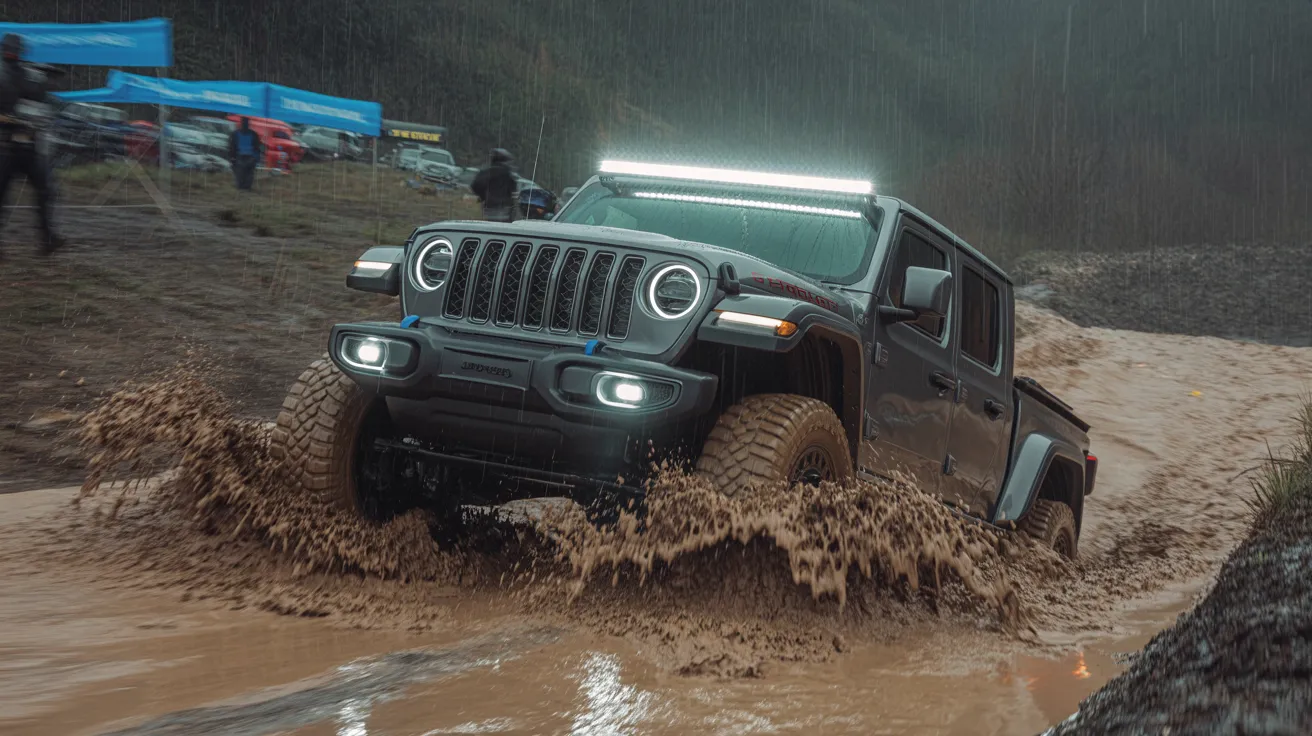
A suspension lift elevates the entire truck and modifies key components to create more ground clearance and suspension movement. You'll observe major gains in ride height, off-road performance, and tire choices, though you should plan for handling tradeoffs, steering changes, and a higher center of gravity. When you desire subtle visual changes, go with a leveling kit. If you require true clearance and suspension articulation, lift it and plan the supporting modifications around your specific needs.
Find the Rough Country lift kit that works with your truck.
Kick off by gathering your truck's year, brand, and model, powertrain, and intended application, as Rough Country manufactures lift kits for specific platform requirements and performance standards. That data shows you which structural parts and hardware will install without fitment or geometry problems.
Start by verifying factory ride height, cabin layout and bed setup, axle specification, and whether your truck has 2WD, 4WD, or adaptive suspension. Rough Country compatibility guides help with this step, but you still need to confirm trim compatibility versus trim-specific components and factory package variations. A kit engineered for a Silverado 1500 may not fit a Trail Boss, and a Ram with pneumatic suspension needs different adjustments versus a truck with coil springs. After checking fitment thoroughly, you eliminate installation issues, component conflicts, and returns.
Find the Rough Country lift kit that fits your driving style.
Match the kit with your actual driving habits, and you'll achieve superior ride quality, lasting performance, and clearance for larger tires without paying for features you won't need. If you mainly commute in your truck, select a basic Rough Country leveling kit or a 2 to 3.5 inch lift kit tuned for daily comfort and consistent steering feel.
If you split time between pavement and trails, step up to a lifted suspension featuring high-quality shocks and adjusted control arm geometry. You'll gain better trail handling, better articulation, and space for bigger tires without straining factory components. For serious trail work, focus on elevated struts, N3 or Vertex shock dampers, and setups that keep driveline angles correct under compression. The correct Rough Country kit must match cargo load, speed, and terrain, and how firm a ride you can accept.
Top Rough Country Truck Accessories
Complete your new lift system by adding Rough Country upgrades that fix the real problem areas you'll encounter after lifting and upgrading tires. Focus on improved entry steps or rock sliders, that regain ease of cabin entry and deliver lower-vehicle protection now that your truck sits higher and broader.
focus
What Budget Should You Plan for Your Build?
After you've selected the lift kit and supporting accessories, create a budget surpassing the headline kit price. You'll need funds for shocks, wheels, tires, wheel alignment, labor, and any drivetrain or steering upgrades your vehicle requires. Company reputation is important here; premium systems tend to deliver better precision, enhanced comfort, and less installation difficulty.
For accurate cost estimates, expect entry-level spacer or leveling setups to start lower, while complete suspension setups featuring control arms, tuned shocks, and oversized tires escalate rapidly. Install difficulty, shop rates, and alignment calibration can add significantly. You should also price supporting upgrades like gear changes, brake components, and recovery gear if you're building for trail use. If cash flow matters, compare payment plans thoroughly and focus on reliability over showy accessories.
Common Questions Answered
Can Lift Kits Affect Factory Warranty Coverage?
Yes, lift kits can affect your factory warranty coverage, but they won't automatically cancel it. You encounter warranty issues if the dealer proves the suspension modification led to or was involved in a failure. Engine, steering, suspension, and drivetrain issues often trigger dealer disputes. You should keep installation records, choose quality parts, and stick to maintenance schedules. That helps you contest rejected claims and maintain protection in cases where the modification isn't responsible.
Does Going Bigger Require Gear Changes?
Yes—if you jump multiple tire sizes, you'll often need re-gearing. Consider moving from 31s to 35s, for example—your vehicle may feel underpowered, shift irregularly, plus create drivetrain stress under load. Re-gearing bring back correct gear ratios, allowing you to recover acceleration, towing performance, and transmission behavior. You might not need it for a minor upsizing, however if power, fuel economy, or shift quality drop, it's typically the right decision.
How Often Should Lift Kit Components Be Inspected?
You should inspect lift system components after the first 500 miles, then at every oil change or 3,000 to 5,000 miles, subject to your driving summary habits. Periodic inspections assist you in notice bushing wear, shock leaks, bracket damage, and alignment issues soon. Check Fastener torque after hard off-road runs, towing, or impacts. If you drive in mud, salt, or rough terrain often, shorten intervals and look at suspension and steering components more frequently.
How does a lift kit influence your truck's towing and payload capacity?
Yes, a suspension system can change your vehicle's towing and payload specifications. When you raise ride height for improved clearance, you adjust suspension geometry, balance point, and leverage on components. That can lower stability under load and heighten drivetrain pressure, especially with larger tires. You should follow your maker's specs unless an engineered kit formally documents revised capacities. Right alignment, gearing, and braking operation are significant too.
Do alignment checks require attention after installing truck accessories?
Yes—if attachments alter height of ride, suspension geometry, steering direction, or tire measurement, you need an alignment. You'll feel the theory without delay: slight changes can pull your truck off-center, scrub tread, and compromise handling. A proper wheel alignment restores camber angle value, caster, and toe angle value to manufacturer spec. After certain modifications, you should also arrange brake system calibration for autonomous driver system accuracy. You extend tire lifespan, steering exactness, and real-world safety by checking alignment immediately.
Conclusion
Picking the ideal lift package and components copyrights on your truck usage, your desired look, and what your budget can handle. When you match a Rough Country lift kit to your driving patterns, you'll get performance, clearance, and looks which coordinate as efficiently as a calibrated engine. Add intelligent upgrades, organize your budget responsibly, and you'll build a truck that's practical on the road, powerful off-road, and set for any future work.